



























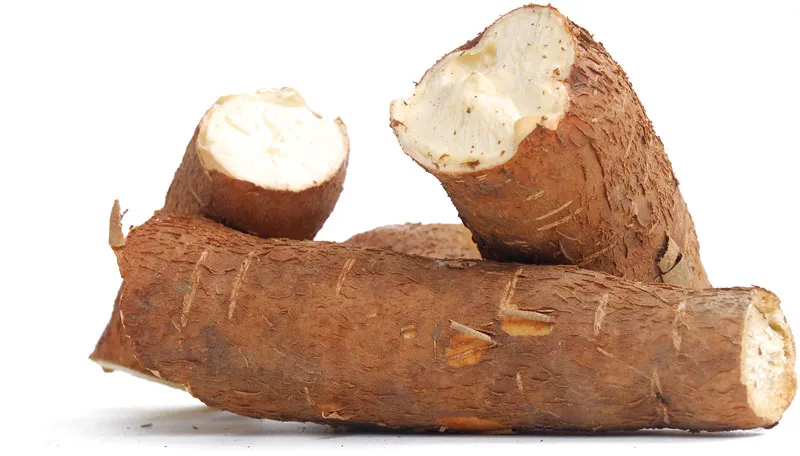
Cassava — also known as manioc or yuca — is a root vegetable that shows up across African, Caribbean, and South American kitchens in more forms than almost any other staple. If you’re new to cooking with it, a little know-how goes a long way, because raw cassava needs proper handling before it’s safe and enjoyable to eat.
What makes cassava different
Cassava has a tough, bark-like brown skin over dense white flesh. It’s naturally low in fat and a good source of carbohydrates, but the raw root contains compounds that must be removed through peeling, soaking, or thorough cooking — never eat it raw. Once properly prepared, it’s a mild, starchy base that takes on whatever flavors you cook it with.
Choosing good cassava
Look for roots that feel firm and heavy for their size, with skin free of soft spots or mold. A fresh cut end should look moist and white, not dry or discolored. We bring in Manioc / Cassava regularly, so check what’s freshly stocked before you buy.
Preparing it at home
- Peel thoroughly — remove the brown outer skin and the pinkish layer just beneath it.
- Cut and rinse — chop into manageable pieces and rinse well.
- Boil until tender — this is the most common method, usually 20–30 minutes depending on the piece size. Boiled cassava can be eaten as-is, mashed, or fried afterward for a crisp finish.
Ways to use it
Boiled and served with a stew or sauce is the simplest route. Boiled-then-fried gives you a crispy exterior similar to home fries. It’s also the base for cassava flour, tapioca, and fufu in many households — a genuinely versatile root once you know the basics.
Storage
Whole, unpeeled cassava keeps for about a week at room temperature in a cool, dry spot. Once peeled or cut, refrigerate and use within a couple of days, or freeze for longer storage.
Looking for other root vegetables and staples? Browse our full Fresh Vegetables selection — we restock regularly to keep the essentials on hand.